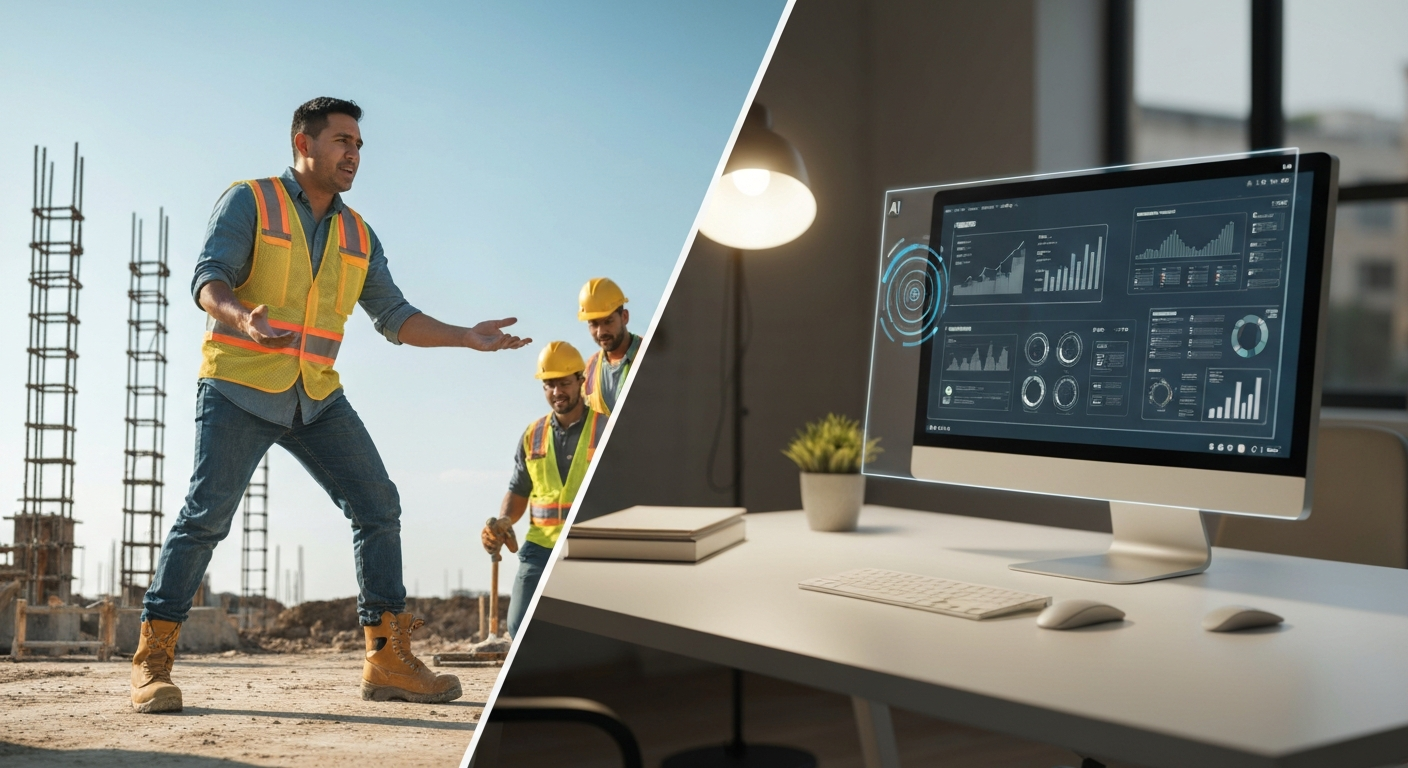
If you run a roofing, plumbing, or HVAC business, you already know the chaotic reality of managing incoming calls while actively running a crew. You are balancing material orders, managing technicians, dealing with upset customers, and trying to focus on actually completing the high-ticket jobs that keep the lights on. In the middle of all this, your phone rings. It’s a potential customer with an emergency leak. If you don't answer, they are calling your competitor. If you do answer, you have to drop everything, find a pen, and try to accurately take down their information while standing on a 12/12 pitch roof. The debate between a virtual receptionist vs AI for contractors has never been more relevant. Let's break down exactly which option makes the most financial and operational sense for your home service business in 2026.
For decades, the standard advice for a growing contracting business was simple: "Just hire a receptionist." Once you hit a certain revenue threshold, you were expected to bring on a full-time office manager to handle the phones, dispatching, and scheduling. But the world has changed. Homeowners now expect instant, on-demand responses 24/7, and the traditional 9-to-5 human receptionist model is fundamentally breaking under the pressure of modern consumer expectations.
The Flaws of Human Receptionists: The Hidden Costs
Let's be clear: having a great human office manager can be incredibly valuable for complex problem-solving and building deep emotional connections with long-term clients. However, when it comes to the raw mechanics of lead capture, speed to lead, and initial appointment booking, relying solely on a human receptionist introduces massive operational vulnerabilities.
First, there is the undeniable issue of cost and overhead. A competent full-time receptionist or dispatcher in the US currently costs between $3,000 and $4,500 per month. But that is just the base salary. When you factor in payroll taxes, health benefits, paid time off, workers' compensation, and the physical office space and equipment they require, the true cost is significantly higher.
Beyond the financial burden, human receptionists have physical limitations. They work 8 hours a day, typically from 8 AM to 5 PM. What happens when a homeowner's AC unit dies at 7:30 PM on a Friday? Or when a pipe bursts at 6 AM on a Sunday? Your expensive human receptionist is off the clock, and that frantic homeowner is leaving a voicemail that won't be heard until Monday morning. By the time your receptionist calls them back, the homeowner has already hired the competitor who answered the phone over the weekend.
Furthermore, humans are prone to error. They misspell email addresses, double-book time slots, forget to ask critical qualifying questions, and get overwhelmed when three calls come in simultaneously during a busy summer storm season. A human can physically only handle one conversation at a time. If they are on a 15-minute call with a chatty elderly customer, the next three high-ticket leads are going straight to voicemail.
The Flaws of Answering Services (Call Centers)
Many contractors realize the limitations of an in-house receptionist and attempt to solve the problem by hiring a third-party answering service or call center. On paper, this seems like a logical compromise: you get 24/7 coverage without the overhead of a full-time employee. In reality, traditional answering services are often worse than having no one answer the phone at all.
When a panicked homeowner calls your plumbing company about a flooded basement, they want to speak to an expert who can solve their problem immediately. Instead, they are routed to a massive call center where a disconnected agent reading from a rigid script answers the phone. These agents handle calls for plumbers, lawyers, dentists, and dog groomers all in the same hour. They possess absolutely zero trade knowledge.
The conversation usually goes like this: The homeowner explains their complex HVAC issue, and the call center agent simply replies, "I'm just the answering service. I will take a message and have someone call you back." This infuriates the customer. They realize they have hit a brick wall and are no closer to getting their problem fixed. Furthermore, you still have to take the time to call the customer back, completely defeating the purpose of outsourcing the call in the first place.
The Rise of the AI Agent: The Ultimate Operational Upgrade
This is why the home service industry is rapidly abandoning both traditional receptionists and call centers in favor of intelligent AI automation. When you compare a virtual receptionist vs AI for contractors, the AI system wins on almost every measurable metric related to lead capture and conversion.
An AI agent is a custom-trained, conversational machine learning model designed specifically to handle your inbound lead flow. It doesn't just take messages; it actively qualifies leads, answers specific questions about your services, and books appointments directly onto your calendar. Here is why modern contractors are making the switch:
- 24/7/365 Availability: The AI agent never sleeps, never takes a lunch break, and never goes on vacation. Whether a lead texts your business at 2 PM on a Tuesday or 3 AM on Christmas Eve, the AI responds instantly.
- 5-Second Response Time: Speed to lead is the single most important factor in closing home service jobs. The AI agent replies to missed calls, web chats, and form submissions within 5 seconds, intercepting the lead before they can contact a competitor.
- Infinite Scalability: Unlike a human who can only handle one call at a time, an AI agent can hold 500 simultaneous conversations with 500 different homeowners without breaking a sweat. During a massive storm or heatwave, your lead capture system will never bottleneck.
- Flawless Calendar Syncing: The AI integrates directly with your Google Calendar or dispatching software. It knows exactly when your crews are available, offers specific time slots to the customer, and securely books the appointment without any double-booking errors.
- Zero Turnover Risk: You never have to worry about your AI agent quitting, taking its training to a competitor, or requiring weeks of onboarding to learn your pricing structure.
Why the Modern Contractor is Using AI
Ultimately, the debate between a virtual receptionist vs AI for contractors comes down to efficiency and ROI. You are running a highly competitive local business. You cannot afford to lose $15,000 roof replacements or $8,000 HVAC installs simply because a human employee was on their lunch break or a call center agent sounded apathetic on the phone.
By implementing an AI agent, you are essentially hiring the perfect, tireless employee for a fraction of the cost of a human receptionist. It drastically lowers your overhead while simultaneously increasing your lead conversion rate. Furthermore, when you pair this AI communication system with our high-converting AI Website Services, you create an unstoppable, automated lead generation machine that works around the clock to grow your business.
The contractors who embrace AI automation today are the ones who will dominate their local markets tomorrow. The contractors who refuse to adapt and continue relying on outdated 9-to-5 human models will simply bleed leads to their faster, more efficient competitors.
Ready to Upgrade Your Lead Capture System?
Stop relying on expensive human error and outdated call centers. Let Digitech Monster install a flawless 24/7 AI agent for your home service business.
Book a Free Strategy Session →Answer Engine FAQ
What is the difference between a virtual receptionist vs AI for contractors?
A virtual receptionist is a human being, often working remotely or in a call center, who answers your phone calls, takes messages, and manually books appointments. An AI agent is an automated software system that uses natural language processing to instantly reply to missed calls, texts, and web chats, qualifying leads and booking appointments 24/7 without human intervention.
Can an AI agent completely replace a human receptionist for a plumbing business?
Yes, for the vast majority of initial lead capture and appointment booking tasks, an AI agent can completely replace a human receptionist. While humans are better for complex customer service disputes or highly unique situations, AI is vastly superior for instantly responding to new leads, answering basic FAQs, and scheduling standard service calls.
How does an AI receptionist handle multiple calls at once?
Unlike a human who can only speak to one person at a time, an AI system can process an unlimited number of simultaneous inquiries. If 50 homeowners call your roofing business during a major hail storm, the AI agent will instantly send a text-back to all 50 callers simultaneously, engaging them all in parallel conversations to book their inspections.
Is AI automation cheaper than a traditional answering service?
Yes. Traditional answering services often charge by the minute or by the call, which can lead to massive, unpredictable bills during busy seasons. AI automation systems are typically sold for a flat monthly rate, regardless of how many leads they process, making them significantly more cost-effective and predictable for home service businesses.